You’ve been there before. It is 10 AM on a Tuesday, you are right in the middle of a deep work session, and you suddenly need your SD card reader or a specific charging cable. You start digging through a plastic tray that was designed in 1995, moving a stapler you haven't touched in years and three dead pens just to find one small tool. By the time you find it, your focus is gone. The problem isn't your lack of discipline. It's your gear. Most desk organizers are static, meaning they have fixed compartments that assume your work never changes. But in 2026, work is anything but fixed. You might be a software engineer in the morning and a content creator in the afternoon. A rigid plastic box can't keep up with that kind of life.
Modular systems are the key to a personalized, changing workspace. They don't just sit there and hold your stuff. They adapt. They move when you move. Think of it like a Lego set for your productivity. Instead of forcing your workflow into a pre-made mold, you build the mold around the way you actually work.
What Makes a Desk Organizer Truly Modular
So what does modularity actually look like in the real world? It is more than just a few boxes sitting next to each other. A truly modular system consists of components that snap, slide, or stack in nearly limitless ways. The goal is to create a setup that feels like a natural extension of your hands.
The best systems on the market right now use a few clever tricks to stay flexible. Some, like the Ugmonk Gather, use a magnetic base. This allows you to snap a pen pot, a phone stand, or a post-it holder onto a wooden rail in any order you like. If you're left-handed, you just slide everything to the left. If you get a new tablet, you swap out a small tray for a larger dock.
Other systems use a grid-based approach. The Balolo Setup Cockpit, like, uses a patented mounting grid on the underside of a desk shelf. You can bolt on interchangeable accessories like laptop docks or MagSafe mounts. It's about reducing friction. When every tool has a dedicated home that you chose for it, your brain doesn't have to work as hard to stay organized.
Matching the Organizer to Your Specific Workflow Style
Your desk should look different depending on what you do for a living. If you're a digital creator, your needs are worlds apart from someone who handles physical contracts all day. This is where modularity shines because you can specialize your "cockpit" without buying an entirely new desk.
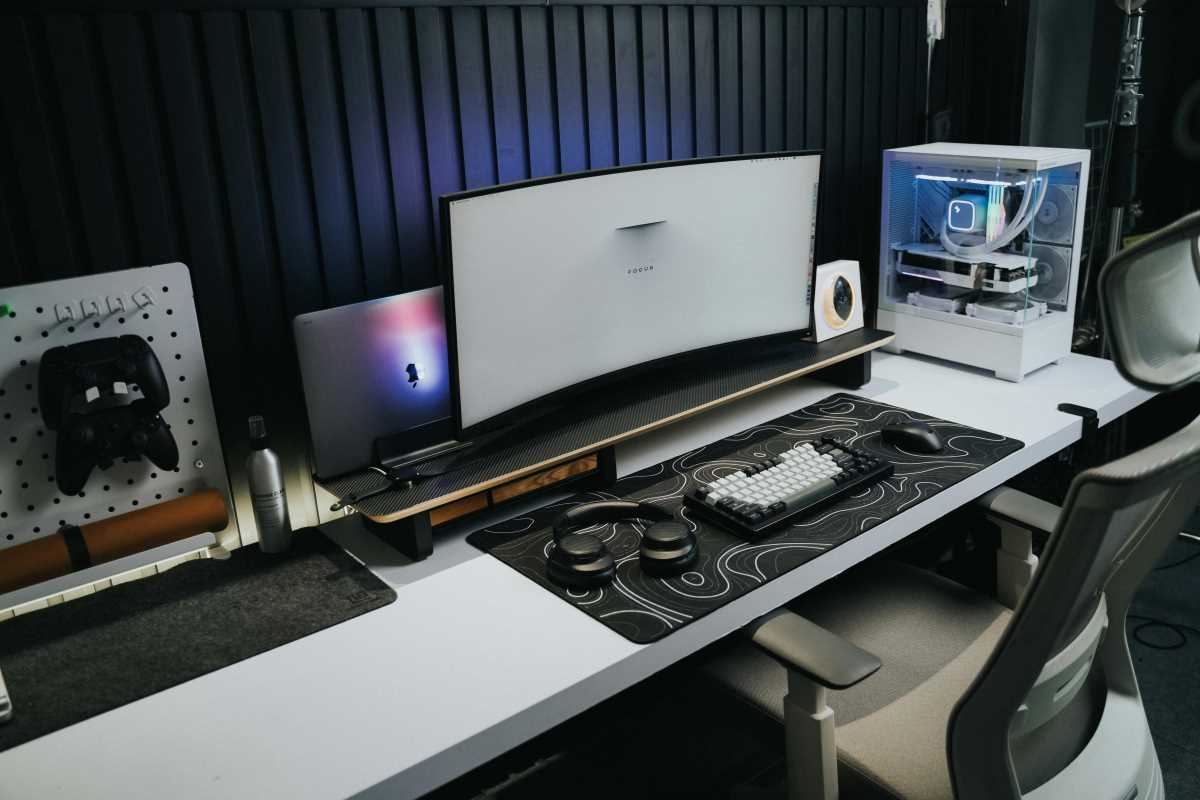
Take the digital creator. You likely have a mess of peripherals, from external SSDs to specialized controllers like a Stream Deck. A modular setup allows you to mount these items directly into your line of sight. You can keep your desk surface 70% clear, which is the golden ratio experts recommend for maintaining focus.
On the flip side, consider the paperwork professional. You don't need a mounting bracket for a camera, but you do need vertical file management and quick-access slots for active projects. A modular system like the Grovemade Desk Shelf lets you tuck away your keyboard and use specialized dividers to keep your most important documents upright and visible. It's about creating a setup that reduces the "startup cost" of your next task.
The Productivity Payoff of Adaptive Organization
It's easy to think of desk organization as just an aesthetic choice, but there is a real productivity payoff. Physical clutter is a silent tax on your brain. It increases cortisol and makes it harder for you to make decisions. When your desk is a mess, your mind feels like it has too many tabs open.
Modular systems help by implementing a "zoning" methodology. You can create a Primary zone for things you touch every ten minutes, a Secondary zone for things you use once an hour, and a Reference zone for long-term storage. Because the system is modular, you can physically move these zones as your projects change. If you're starting a month-long research project, your reference materials move into your primary zone with a simple snap or slide.
This adaptability also has long-term value. In the past, when your job changed, you threw away your old desk accessories. Now, you just buy a new module. It's a more sustainable way to work, especially as we see a shift toward biophilic materials like walnut, oak, and cork. These materials don't just look better, they feel better to use every day.
Top Recommendations
• Balolo Setup Cockpit, The heavy hitter for power users. Its mounting grid allows you to swap accessories with a single bolt, making it easy to evolve your desk from a gaming setup to a professional editing suite in minutes.
• Ugmonk Gather, The gold standard for minimalists. The magnetic base is incredibly satisfying to use and allows for infinite configurations. It also pairs perfectly with their Analog system for those who still love pen and paper.
• Orbitkey Nest, The best choice for hybrid workers who move between a home office and a co-working space. It’s a portable valet tray that keeps your neededs organized in your bag and on your desk.
• Grovemade Desk Shelf, A premium option for those who want a "fixed" look with modular flexibility. The integrated trays and dividers keep everything tucked away but within reach.
Designing Your Perfect Command Center for 2026
As we move through 2026, the home office has become more than just a place to put a laptop. It is your command center. The shift toward hybrid work means that 79% of remote-capable employees are now working in flexible environments. Your desk needs to be just as flexible as your schedule.
Investing in a modular system is an investment in your future self. You aren't just buying a place to put your pens. You're buying a system that will grow with you as you take on new roles, learn new skills, and tackle new projects. It's about personalizing your space to remove every possible distraction.
Take a hard look at your current setup today. Does it actually help you work, or is it just a graveyard for things you haven't put away yet? If you find yourself fighting your desk more than you're using it, it's time to stop settling for static solutions. Build a workspace that actually adapts to you.