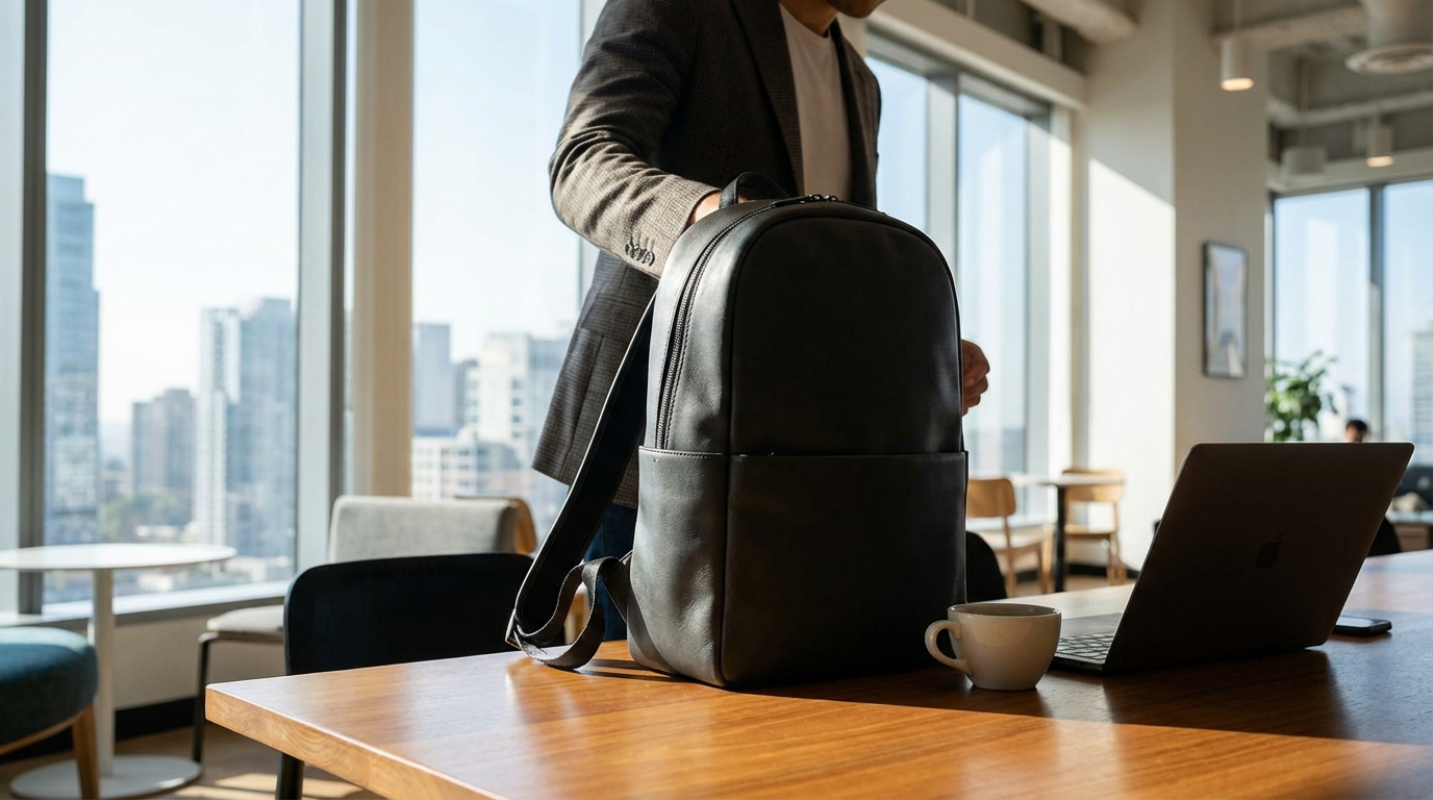
Remember the days when the leather briefcase was the ultimate symbol of corporate success? It was boxy, heavy, and usually spent its life banging against your knee as you hurried to a meeting. Although those bags had a certain old school charm, they don't exactly fit the way we work in 2026. The workplace has changed. We're no longer tethered to a single desk from nine to five. We're moving between home offices, coworking spaces, and airport lounges. This shift in culture demands a carry solution that's as flexible as our schedules. So why are so many professionals trading in their traditional bags for backpacks? It mostly comes down to the way we move. Have you ever tried to handle a crowded subway or sprint for a flight with a heavy messenger bag pulling on one shoulder? It's a recipe for a sore neck and a lopsided gait. Backpacks solve this by distributing weight across your strongest mid-back muscles. According to health professionals, a loaded bag should never exceed 10 to 15 percent of your body weight, and a well designed backpack makes hitting that target much easier on your frame.
Choosing a backpack isn't just about comfort, though. It's about setting a tone. In the modern office, a sleek, minimalist bag says you're efficient and ready for anything. It's the digital equivalent of a tailored suit (functional, sharp, and prepared for the high speed nature of 2026 business). You aren't a student heading to a lecture. You're a professional with a mobile command center on your back.
The Anatomy of a Sleek Professional Backpack
When you're shopping for a professional bag, the first thing you'll notice is that material matters. You want something that can survive a sudden downpour without soaking your $2,000 laptop. Look for high grade fabrics like 1680D ballistic nylon, which was originally developed for military flak jackets. It's incredibly tough and has a matte finish that looks expensive. Some of the best bags in 2026 also use X-Pac or recycled polyester with vegan leather accents for a look that's boardroom ready but environmentally conscious.
The aesthetic standard for a professional bag is all about "stealth" design. Think clean lines, hidden zippers, and a total lack of dangling straps or loud logos. You want a bag that maintains its shape even when it's nearly empty. There is nothing less professional than a floppy, saggy bag that looks like a discarded gym sack. A structured design, like those found in high end Italian leather options, allows the bag to stand upright on its own when you set it down next to your chair during a presentation.
Inside the bag, organizational intelligence matters. You aren't just looking for a big empty hole. You need dedicated, padded sleeves that can hold up to a 16 or 17 inch laptop. The best designs use "floating" sleeves. These keep your computer suspended an inch or two above the bottom of the bag, so if you drop your pack, your laptop never actually hits the ground.⁴ It's a small detail that can save you a massive headache.
Versatility for the Hybrid Worker
The "Bleisure" movement (the blending of business and leisure travel) is the dominant trend for workers in 2026. We're often extending business trips into weekend getaways, and we need a bag that can handle both. A sleek professional backpack should transition seamlessly from a client pitch to a casual dinner or a quick hiking trail. The trick is finding the size sweet spot. You want enough capacity (usually around 20 to 25 liters) to fit a change of clothes or your gym gear without the bag looking bulky or oversized.
Versatility also comes in the form of "3-way" designs. These are bags that feature hideaway straps, allowing you to carry the pack like a backpack for the commute, then tuck the straps away and carry it by a side handle like a traditional briefcase when you walk into a formal office. It's the ultimate chameleon move for the hybrid worker who moves through different social and professional environments in a single day.
Investing in a high quality backpack is a necessary move for the contemporary worker. Think of it as a piece of needed infrastructure. You wouldn't use a slow, glitchy computer for your main work, so why use a bag that makes your commute harder and puts your gear at risk? A well chosen bag supports your productivity by keeping you organized and comfortable, all while protecting your professional image.
Top Picks for 2026
As we look at the best options for this year, several brands have emerged as leaders in combining professional aesthetics with rugged durability. The current market favors bags that look like high end fashion but perform like technical outdoor gear.
The Troubadour Apex 3.0 remains a top choice for those who want a "boardroom-ready" look. It uses waterproof recycled materials and has a structure that stays crisp no matter how much you pack into it.³ For those who prefer a truly minimalist profile, the Aer Slim Pack is a standout. It's designed for the person who only carries the neededs (a laptop, a tablet, and a few cables) and wants to stay as light as possible.
If you're a heavy tech user, the Timbuk2 Authority Laptop Backpack Deluxe offers incredible organization with a dedicated rear access laptop compartment that makes going through airport security a breeze. On the luxury end, the Carl Friedrik Day-to-Day uses stunning Italian leather and a structured design that looks incredible in any professional setting.
Ultimately, the right backpack is the one that disappears into your routine. It should be so intuitive and comfortable that you stop thinking about it. When your bag works as hard as you do, you're free to focus on the work that actually matters.
This article on rotechno.com is for informational and educational purposes only. Readers are encouraged to consult qualified professionals and verify details with official sources before making decisions. This content does not constitute professional advice.