You've probably spent at least one afternoon trying to balance a laptop on a pile of books while sitting at your kitchen table. It's a rite of passage for the modern worker, but in 2026, we've moved past the "making it work" phase. With over 32 million Americans now working remotely, the home office isn't just a luxury anymore. It's a necessity. So what does this actually mean for you? If you're living in a studio apartment or a house where every room already has a job, you don't have space for a massive executive desk. But a small space shouldn't mean you have small ambitions for your career. It's about being strategic. You're looking for pieces that reflect your professional drive without making your living room look like a corporate cubicle farm.
Think of your small office like a high-end watch. Every component has to be precise, functional, and efficient. The goal here is to select furniture that boosts your productivity and then stays out of your way when the workday is over.
Desk Solutions That Disappear to Save Your Floor Space
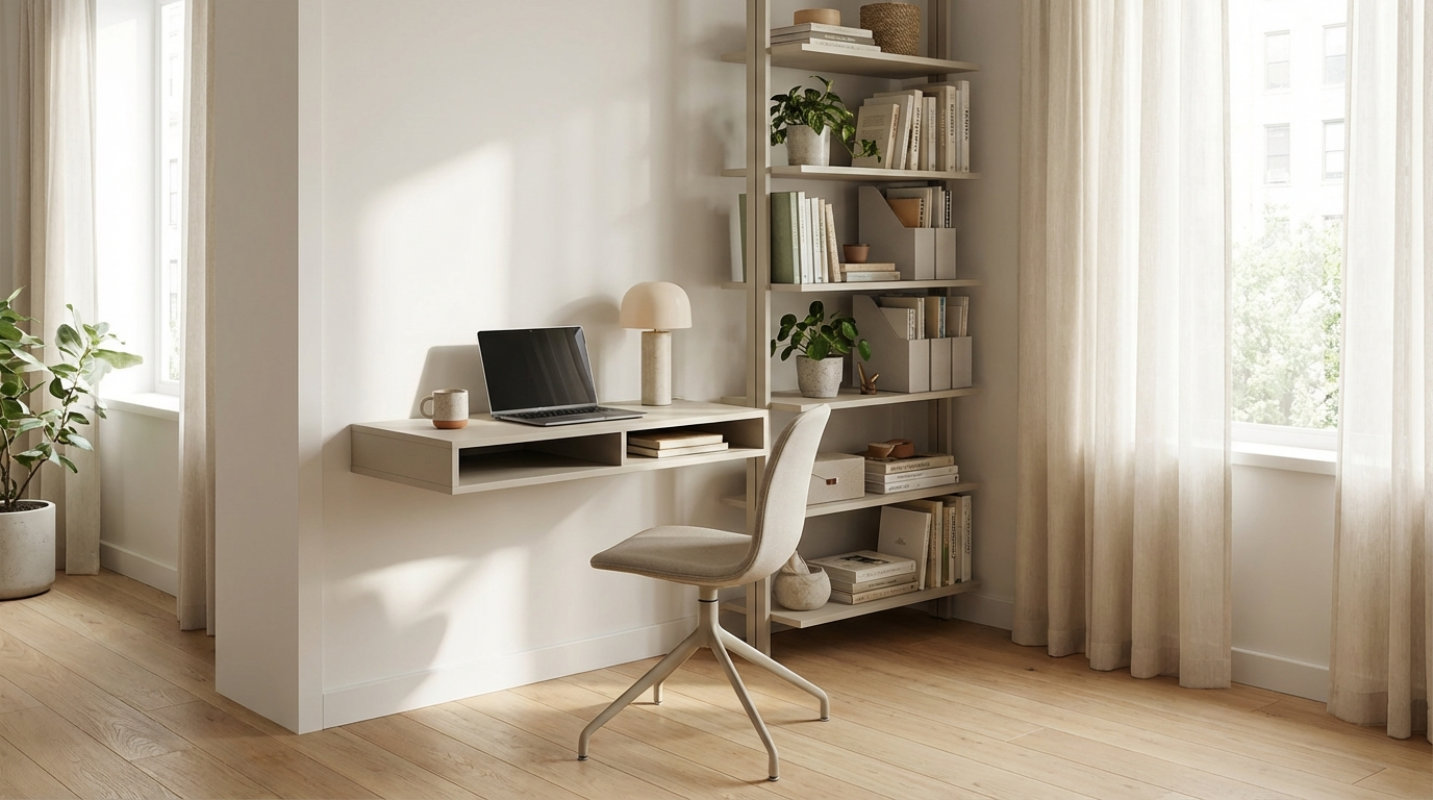
The desk is the heart of your office, but it's also the biggest space hog. If you want to reclaim your room, you need to think vertically. Wall-mounted or floating desks are the gold standard for small spaces because they keep the floor clear. This makes the room feel larger because your eyes can see all the way to the baseboards.
The Nathan James Theo is a fan favorite because it looks like a ladder. It uses the wall for shelving and gives you a slim work surface that doesn't overwhelm the room. If you're working in a shared space like a bedroom, the Prepac floating desk is a great choice. It has curved side panels that act like little blinders, giving you a bit of visual privacy while you're in the zone.
Have you ever considered a desk that can literally hide? The Lillipad foldable electric standing desk is a 2026 standout for this exact reason. It gives you the health benefits of a standing desk but can fold down to just six inches tall.² You can slide it under your bed or a sofa when you're done. It's the ultimate "now you see it, now you don't" piece for anyone living in a micro-apartment.
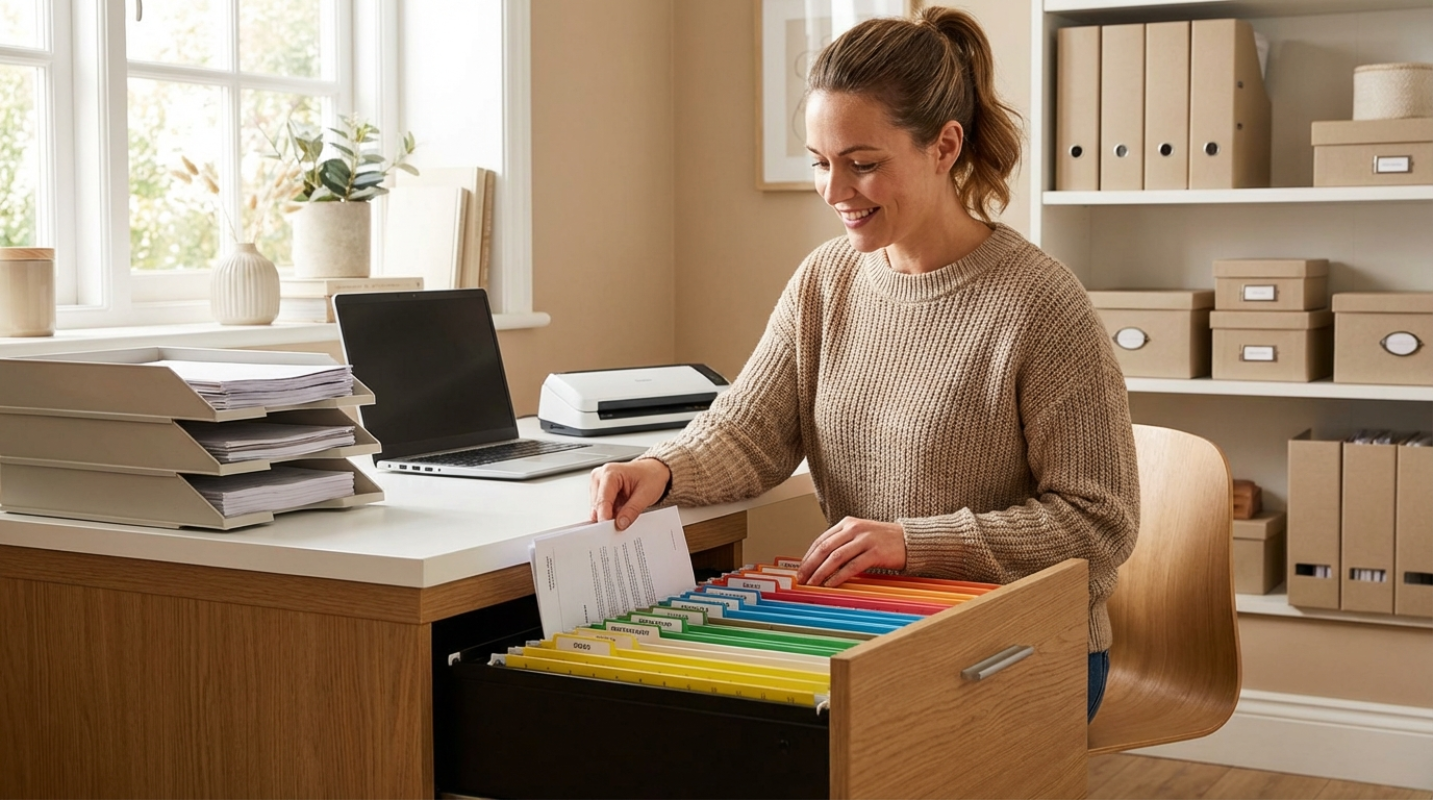
Smart Storage to Clear the Mental Clutter
Visual clutter is the physical version of having forty tabs open in your browser. It's distracting and it makes a small room feel like it's closing in on you. When you're working with limited square footage, you have to get your gear off the desktop.
Pegboards are your best friend here. The IKEA Skådis system is a classic for a reason. You can hang your headphones, pens, and notebooks on the wall, which doubles your storage capacity without adding an inch to the floor footprint. It's a simple move that supports better focus by keeping your immediate workspace clean.
If you have a bit of floor space under your desk, look for slim, rolling drawers. The key is to find units that are narrow enough to leave room for your legs. Remember the "2-3 finger rule" for ergonomics. You need a 2 to 3 finger gap between the seat edge and the back of your knees to keep your circulation moving. If your storage is so bulky that you can't sit properly, it's not the right piece for you.
Seating That Stays Out of the Way
The biggest mistake people make in small offices is buying a chair that's built like a tank. Huge executive chairs are comfortable, but they're visual anchors that make a small room feel heavy. You want something with a smaller footprint that still supports your back.
The Herman Miller Sayl is a great pick for small rooms. It has a frameless back that you can see through, which helps the chair blend into the background. Another smart move is to look for chairs with "flip-up" arms. This allows you to tuck the chair completely under the desk when you aren't using it, which can save you up to 30 inches of floor space.
If you really want to save space, consider a stool or an ottoman that doubles as storage. Although these aren't great for eight-hour marathons, they're perfect for quick tasks. For the long haul, the Branch Ergonomic Chair Pro is a 2026 market leader because it offers full-scale support in a much slimmer profile than traditional office chairs.³
Top Recommendations for Small Offices
If you're ready to upgrade your setup, these pieces are the current leaders for space efficiency and professional quality.
you have the big pieces in place, it's the little things that make the office feel professional. Cable management is the most underrated part of a small office. A mess of tangled wires makes even the most expensive desk look like a disaster. Look for desks with integrated "power alleys" or use magnetic cable shrouds to keep everything tight.
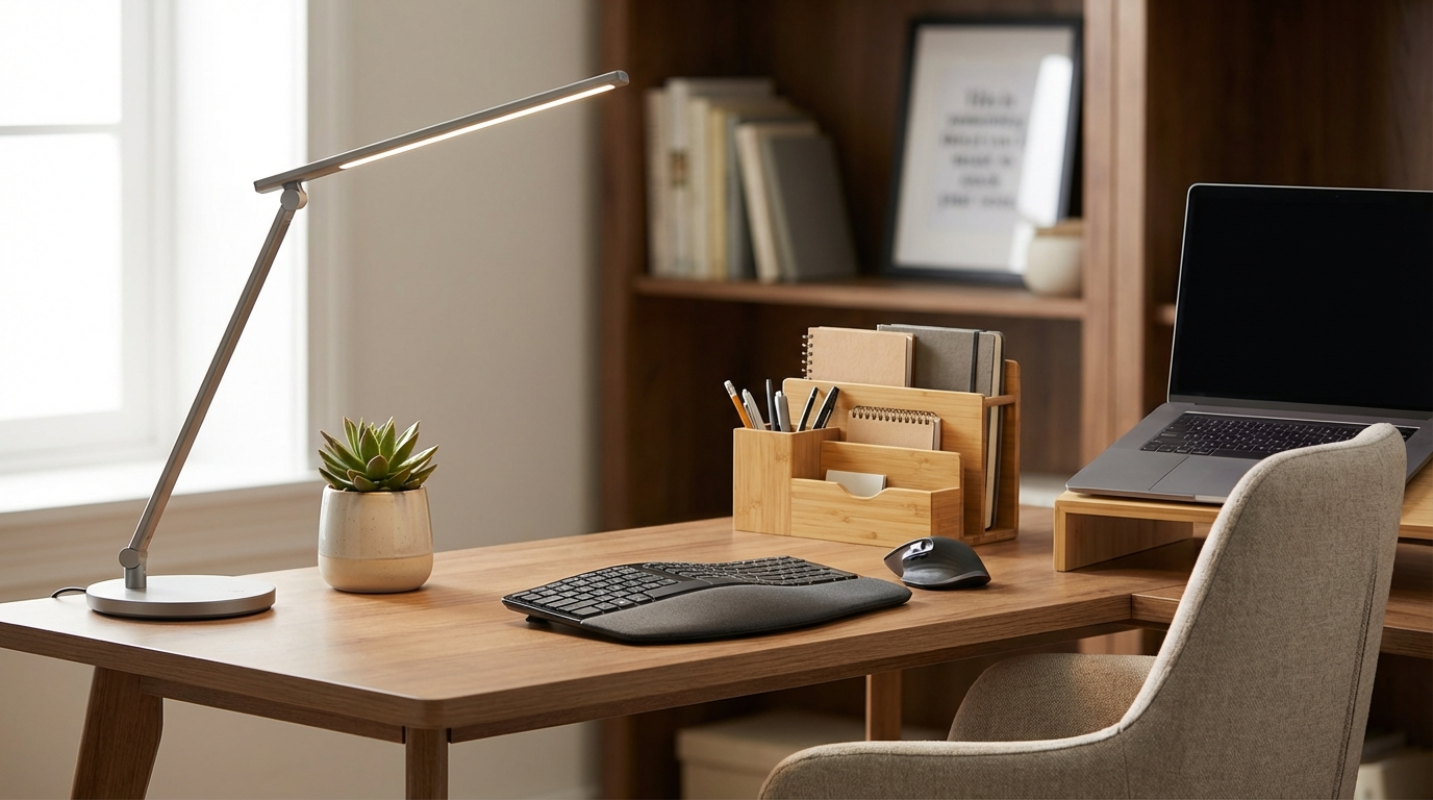
Lighting is another area where you can save space. Stop using bulky floor lamps that take up a corner. Use LED strip lights under your shelves for ambient light and a simple clamp-on task lamp for your desk. This keeps your work surface clear for what actually matters.
Investing in the right compact furniture is an investment in your work quality. When you aren't fighting your furniture for space, you can actually focus on your goals. It's about creating a zone where you can be your most productive self, no matter how many square feet you're working with.