You know that feeling. It's 6:00 PM on a Tuesday, you're standing in front of an open fridge, and you're staring at a half-empty jar of pickles and some wilted cilantro. You had a plan, or at least you thought you did. But the chicken you swore was in the freezer is actually still at the store, and the spinach you bought three days ago has already turned into a green puddle. This isn't just about being messy. It's about the mental load. Most of us find cooking itself somewhat relaxing, but the logistics are what kill the vibe. Deciding what to make, checking if you have the ingredients, and realizing you bought a second bottle of mustard when you already had three in the back of the pantry is exhausting. In fact, recent data shows that 64% of home cooks want to quit dinner entirely because the planning process is so draining.
So what does this actually mean for your daily life? It means we need a better system. We've spent decades treating the kitchen like a collection of dumb boxes that just hold stuff. But in 2026, the kitchen is finally starting to think for itself. Smart technology is moving away from being a collection of flashy gadgets and toward becoming a cohesive system that manages your inventory so you don't have to.
How the Modern Smart Fridge Reclaims Your Time
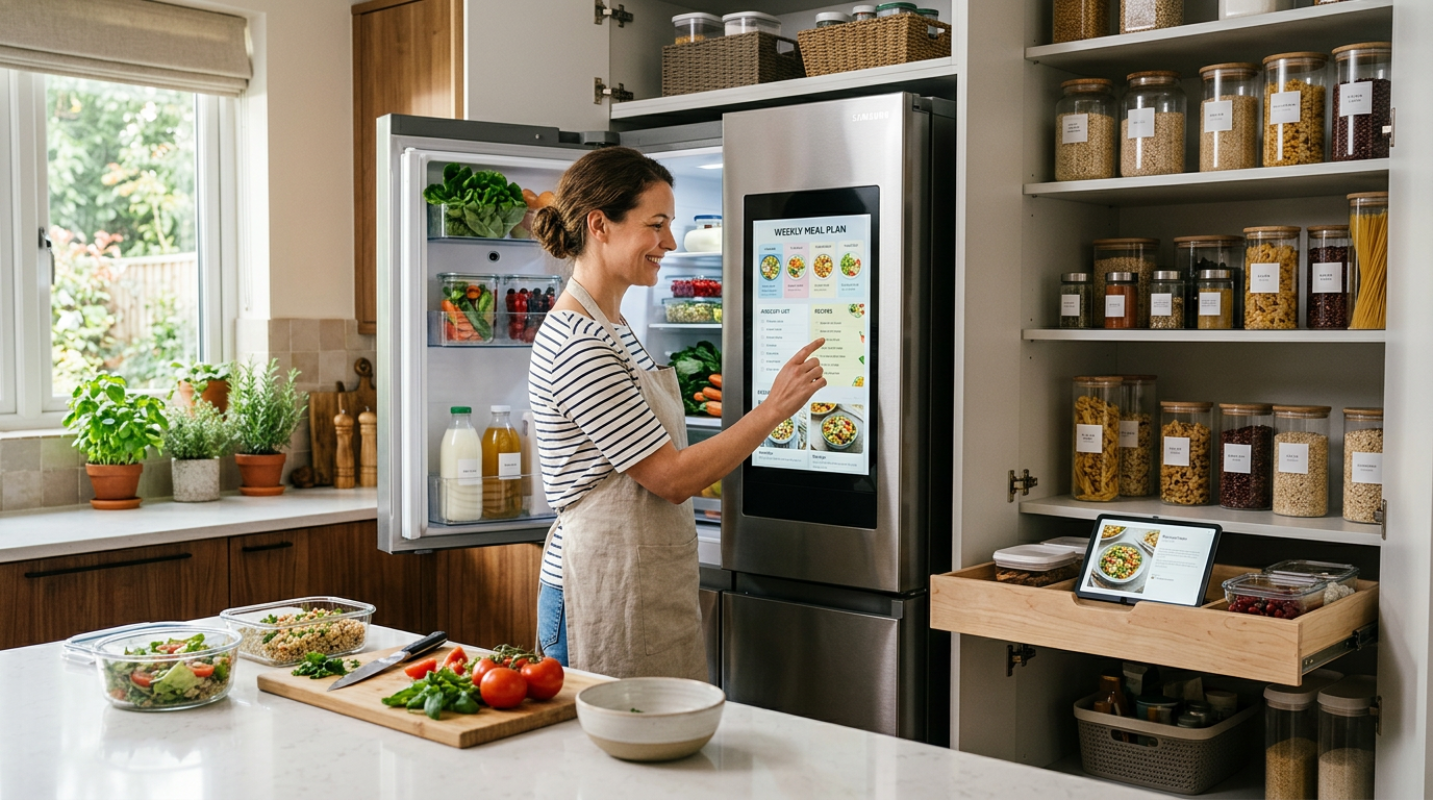
Think of the modern smart fridge as the digital equivalent of a personal assistant who lives in your kitchen. It's no longer just a cold box for your milk. The latest models, like the Samsung Bespoke AI Family Hub+, use internal cameras and deep learning to actually see what's inside. As of 2026, these systems can recognize dozens of types of fresh produce and even more processed items.
When you toss a bag of apples into the crisper, the fridge notes it. When those apples have been sitting there for a week, the fridge sends a notification to your phone suggesting you might want to make a crumble or put them in a salad before they go soft. It's a proactive approach that stops the "what's for dinner?" stress cycle before it even starts.
Other brands are taking a slightly different path. The GE Profile smart models include built-in barcode scanners on the door. This is a great solution for those of us who don't trust AI to perfectly identify every brand of Greek yogurt. You just swipe the item as you put it away, and it's logged. No more duplicate purchases of soy sauce because you couldn't remember if you were out. It's about confidence. When you're at the grocery store and can't remember if you have eggs, you just pull up the live feed on your phone and look.
Digitizing Your Dry Goods Inventory
The fridge is only half the battle. The real chaos usually lives in the pantry. It's the land of forgotten lentils and three open boxes of baking soda. Although full smart pantries with RFID-enabled shelving can cost a fortune, there are some clever ways to retrofit your existing shelves without spending $12,000.
One of the most practical solutions is the use of smart tags. Systems like Ovie Smarterware use Bluetooth-enabled LightTags that you can clip onto any container. These tags use a simple color-coded light system. Green means it's fresh, yellow means you should use it soon, and red means it's past its prime. It’s a visual shorthand that saves you from the "sniff test" or, worse, taking a bite of something stale.
If you want to go a step further, look at systems like PantryChic. This is a base unit with an integrated scale that stores and dispenses ingredients by weight. It's perfect for bakers because it tracks exactly how much flour or sugar you have left down to the gram. When you're low, it adds the item to your digital grocery list automatically. This kind of automation removes the manual labor of inventory management, which is where most meal prep plans fall apart.
Connecting Inventory to Inspiration
The magic happens when these devices start talking to each other. In 2026, your fridge isn't just a standalone appliance. It's part of an ecosystem. When your Samsung fridge sees that you have bell peppers, onions, and flank steak that need to be used, it doesn't just tell you they're expiring. It talks to your recipe apps and suggests a stir-fry.
This is the "Zero Labor Home" concept that companies like LG are pushing. The goal is to eliminate the cognitive effort of planning. Imagine coming home and having your kitchen hub suggest a recipe based only on what you already have. You don't have to go to the store. You don't have to search through a cookbook. You just start cooking.
Think about a real-life scenario. You're stuck at work late. Usually, this would mean ordering expensive takeout because you're too tired to think. But your phone pings you with a suggestion for a 20-minute pasta dish using the zucchini and parmesan it knows are in your kitchen. It even offers to preheat your smart oven to the right temperature. That’s not just a convenience. It’s a massive reduction in the daily friction that makes adulting so hard.
Investing in Kitchen Sanity
Is it worth the investment? If you look at the numbers, the ROI is surprisingly high. Smart inventory management can reduce food waste by about 40%. For the average household, that's nearly $2,000 saved every year. When you factor in the three to five hours of time saved each week on planning and shopping, these systems start to pay for themselves fairly quickly.
But the real value isn't just in the dollars. It's in the sanity. It's about reclaiming your evening and removing that low-level hum of anxiety that comes from an unorganized home. We're moving toward a world where your kitchen handles the boring stuff so you can focus on the parts of cooking that you actually enjoy.
If you're tired of the kitchen chaos, it's time to stop looking for a better manual planner and start looking at an automated one. Whether it's a high-end AI fridge or a few smart tags for your cereal boxes, these tools are the key to a more relaxed lifestyle. Explore the 2026 models and see which one fits your flow. Your future, less-stressed self will thank you.
Top Recommendations
• Samsung Bespoke AI Family Hub+, The current gold standard for integrated AI vision, identifying up to 37 fresh food types and 50 processed items automatically.
• Ovie Smarterware LightTags, A budget-friendly way to track expiration dates using color-coded lights that sync with your phone and Alexa.
• PantryChic Smart Storage, An needed for bakers that dispenses by weight and tracks dry good levels with extreme precision.
• LG Signature InstaView with ThinQ ON, Features "Affectionate Intelligence" that learns your eating habits to suggest personalized, low-waste meal plans.